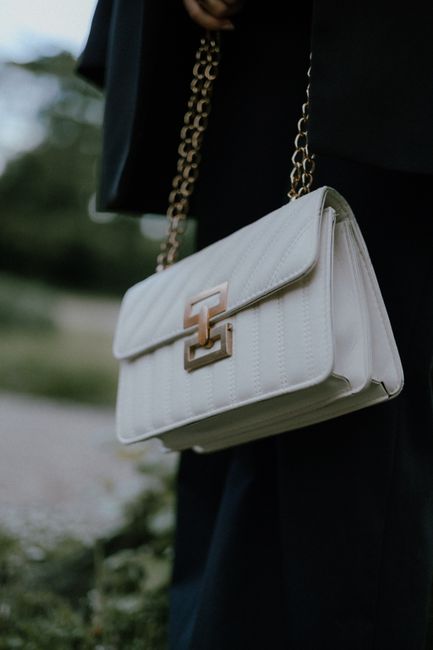
The Investment Handbag: A 2026 Buying Guide
The investment handbag is the most considered purchase in the accessory wardrobe. This guide walks through what actually holds value — and what does not.

The phrase "investment handbag" has been used so loosely that it has nearly lost its meaning, applied to any expensive bag as a justification for the purchase. But the term has a real, specific meaning, and the bags that genuinely qualify as investments are a much smaller and more interesting category than the marketing suggests. This guide is for the buyer who wants to understand that category — which bags actually hold their value, which hold it for the right reasons, and how to think about a handbag purchase that is meant to last decades rather than seasons.
What "Investment" Actually Means
An investment handbag is not simply an expensive one. The term refers to a bag that holds a significant portion of its value over time, and ideally appreciates, due to a combination of scarcity, brand stewardship, design permanence, and market liquidity. The bags that meet this standard are a small group — the Hermès Birkin and Kelly, certain Chanel flaps, select Louis Vuitton and Bottega styles — and they share a set of characteristics that the rest of the luxury market does not. Understanding those characteristics is the difference between buying a bag that holds its value and buying an expensive bag that does not.
The first characteristic is scarcity. A bag produced in limited quantities, with a waitlist or a controlled allocation, holds value because the secondary market cannot easily access it. The second is design permanence — a bag that has looked the same for decades, and that is expected to look the same for decades more, does not date the way a seasonal design does. The third is brand stewardship — a house that protects its pricing, controls its distribution, and resists discounting maintains the value of its pieces. The bags that have all three are the bags that have, historically, held their value.
The Bags That Have Earned the Term
The Hermès Birkin and Kelly are the canonical examples, and they have earned the reputation. Both have been produced in controlled quantities for decades, both have a design that has barely changed, and both have a secondary market that often prices them above retail. The Chanel Classic Flap is the other consistent performer, with a design that has been stable since the 1950s and a pricing strategy that has steadily increased the retail price, which supports the secondary market. The Louis Vuitton Speedy and the Bottega Veneta Cabat are the more accessible members of the category — both hold value well, though not with the consistency of the Hermès and Chanel pieces.
What unites these bags is that they are not trend pieces. They are designs that have outlastied dozens of trend cycles, and that are expected to outlast dozens more. A bag that is "of the moment" — however beautiful — is not an investment, because the moment will pass and the bag will date. The investment bag is the one that is not of any moment in particular, and that is therefore of all of them.
The Condition Question
The value of an investment bag is conditional on its condition, and this is where many owners go wrong. A bag that is used hard, carried daily without protection, and stored without its dust bag and stuffing will lose value regardless of its model. The bags that hold their value are the ones that are cared for — stored properly, conditioned regularly, carried with some awareness of their status as objects. The investment in a bag is not just the purchase; it is the ongoing care, and the buyers who understand this are the ones whose bags actually perform as investments.
The Honest Caveats
The marketing around investment bags tends to omit the caveats, and they are worth stating. First, the historical performance of these bags is not a guarantee of future performance — the secondary market is a market, and it moves. Second, the appreciation that has made Hermès bags famous is concentrated in specific leathers and colors; a standard Togo Birkin in a common color does not appreciate the way a Himalayan does. Third, the liquidity is real but not instant; selling a bag at the top of its value requires patience and the right channel, and a forced sale will not achieve the headline prices.
The most honest way to think about an investment bag is as a purchase that is likely to hold much of its value over time, with some chance of appreciation, and that provides the use and pleasure of a beautiful object in the meantime. That is a more modest claim than the marketing makes, but it is a claim that holds up. The buyer who approaches the category with that understanding — and who buys a bag they actually want to carry, rather than one they think will appreciate — is the buyer who gets the most out of it.
Conclusion
The investment handbag is a real category, but it is a smaller and more demanding one than the marketing suggests. The bags that qualify are few, their value is conditional on care, and their future performance is not guaranteed by their past. For the buyer who understands all of that and still wants one — for the pleasure of the object, the use of it, and the reasonable expectation that it will hold much of its value — the category rewards the attention. For the buyer looking for a guaranteed return, there are better places to put the money.